About MDPE Pipe Fitting
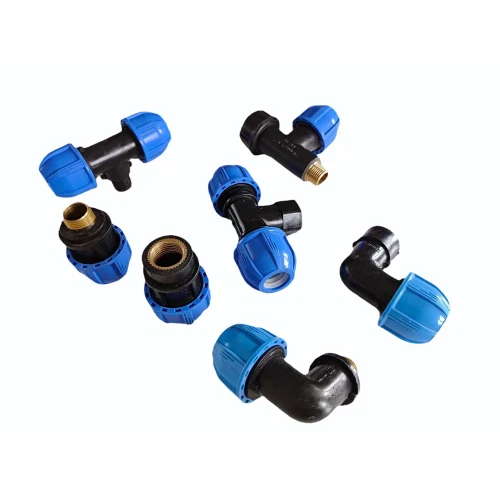
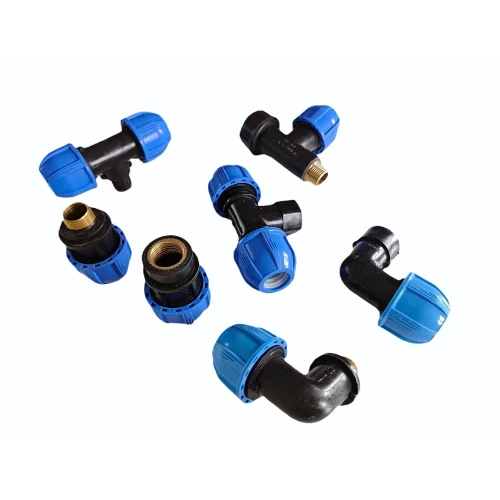
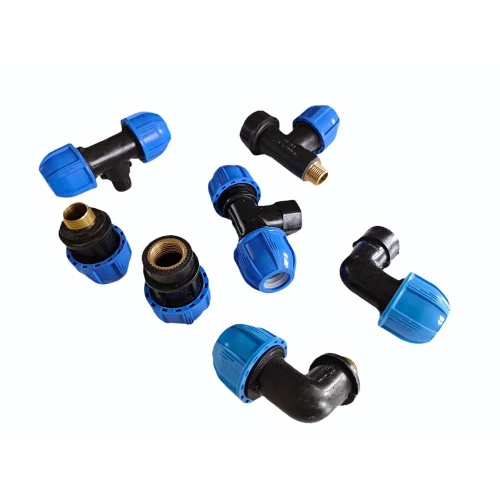
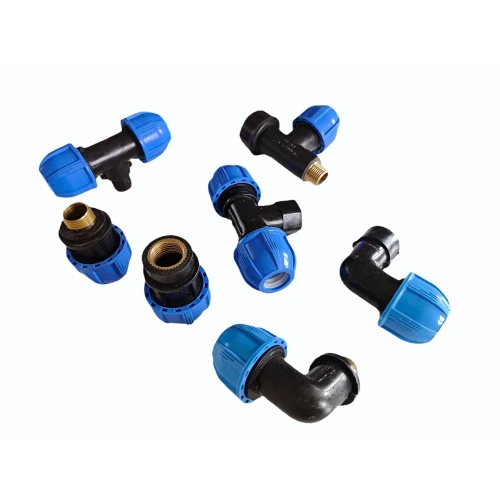
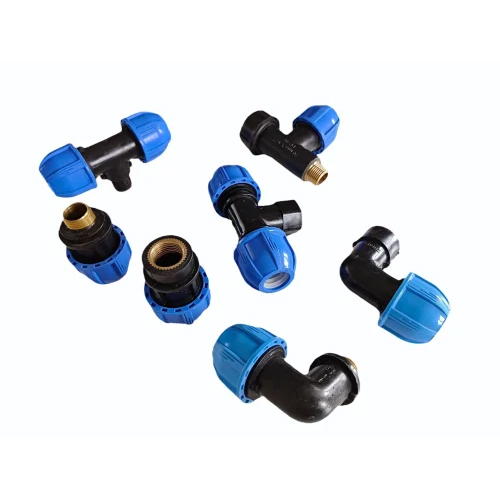
MDPE (Medium-Density Polyethylene) pipe fittings are used in various plumbing and industrial applications due to their durability and flexibility. These fittings are designed to ensure a secure and leak-proof connection for water supply systems, irrigation, and other fluid transfer systems.
Here are some common types of MDPE pipe fittings:
-
Compression Fittings: Used to join MDPE pipes without the need for welding or gluing.
-
Electrofusion Fittings: Utilize an electric current to create a strong bond between pipes.
-
Elbows and Tees: Allow for changes in direction and branching of the pipeline.
-
Couplings and Unions: Used to connect two pipes together.
-
End Caps: Seal the end of a pipeline to prevent leaks.
Key Features and BenefitsOur MDPE pipe fittings are designed with versatility and longevity in mind. They withstand harsh chemicals, resist corrosion, and offer excellent UV protection-ideal for both indoor and outdoor installations. Their easy and quick installation process, aided by push-fit or threaded compression connections, reduces labor time and ensures a secure fit. Double-sealing guarantees leak-free performance, while their recyclability contributes to sustainable practices.
Wide Range of ApplicationsThese fittings cater to municipal, industrial, and agricultural usages such as water supply, plumbing, and irrigation. With their adaptability to varying pressure ratings (PN10, PN16) and temperature resilience from -20C to +60C, the fittings can be deployed in diverse environments, ensuring robust and reliable connections everywhere from city mains to farmlands.
Quality Assurance and ComplianceManufactured under stringent quality standards including ISO 4427-2, DIN, and BS, our fittings guarantee consistent performance and dimensional accuracy (tolerance of 0.2 mm). Customers benefit from a one-year warranty and the peace of mind that comes with durable, high-strength materials (PE80, PE100) and rigorous quality checks.
FAQ's of MDPE Pipe Fitting:
Q: How do MDPE pipe fittings ensure leak-proof connections?
A: MDPE pipe fittings employ a double sealing mechanism, including a high-quality rubber O-ring, which delivers excellent leakage protection. This design allows for secure compression or threaded connections, minimizing the risk of water loss and maintenance issues.
Q: What applications are these MDPE pipe fittings most suitable for?
A: These fittings are primarily used for water supply, plumbing, irrigation, and are well-suited to municipal, industrial, and agricultural scenarios. Their robust chemical and corrosion resistance makes them ideal in environments exposed to varying pressures, chemicals, and outdoor conditions.
Q: When is it recommended to use MDPE pipe fittings over other types?
A: MDPE pipe fittings are recommended when durability, resistance to chemicals and corrosion, and UV stability are required. They are especially advantageous for long-term installations requiring minimal maintenance and reliable leak prevention, such as municipal water lines or irrigation systems.
Q: What is the standard installation process for MDPE pipe fittings?
A: Installation involves cutting the pipe to the desired length, inserting it into the fitting until it reaches the stop, and tightening by hand or with a wrench according to the fitting's connection type (compression, threaded, or push-fit). This straightforward process allows for easy and quick assembly with minimal training.
Q: Where are these MDPE fittings manufactured and supplied from?
A: These MDPE pipe fittings are manufactured and supplied out of India, adhering to international standards such as ISO 4427-2, DIN, and BS. Their quality and reliability make them a preferred choice for projects within India and globally.
Q: What long-term benefits do MDPE pipe fittings offer users?
A: Owners benefit from a lifespan of up to 50 years, exceptional resistance to environmental stresses, and low maintenance needs. Their complete recyclability and warranty support also provide environmental and economic advantages over less durable alternatives.






 Send Inquiry
 Send Inquiry
 Send SMS
 Call Me Free
