About Electrofusion Fitting Pipe Fitting
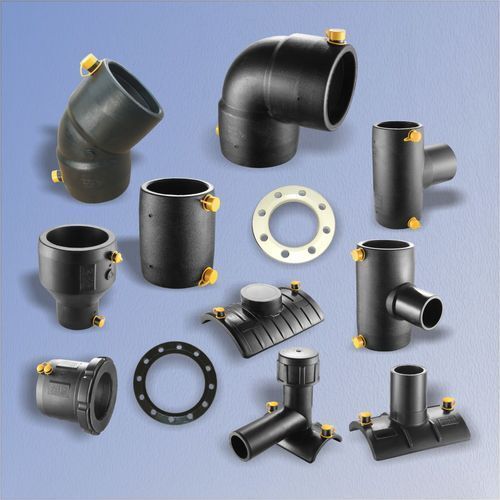
pipes, tube and knees, and pipe coupling. Make sure that you are buying a proper size based on your purpose.
Electrofusion Welding Instructions
Superior Leak-Proof ConnectionsThese electrofusion fittings utilize a state-of-the-art automatic fusion welding process with a typical fusion voltage of 40V, ensuring a strong, durable, and leak-proof join every time. Their design is optimized for both high-pressure and standard-pressure applications, including PN10 and PN16, making them highly reliable in critical infrastructure.
Versatile Applications and CompatibilityDesigned for flexibility, these fittings are ideal for water, gas, and industrial liquid pipelines. Their universal electrofusion sockets ensure compatibility with HDPE pipes of corresponding sizes, supporting installation in municipal, industrial, and commercial environments across India and abroad.
Reliability and Safety Built-InExpertly engineered from robust HDPE, every fitting boasts exceptional corrosion and UV resistance. With compliance to international standards and smooth surface treatment, each product guarantees not just durability, but also minimal maintenance and operational safety over its long service lifespan.
FAQ's of Electrofusion Fitting Pipe Fitting:
Q: How do you install electrofusion pipe fittings for HDPE pipes?
A: Electrofusion fittings are installed using an automatic electrofusion welding machine. After cleaning the ends of the HDPE pipes, insert them into the fitting's socket. The machine then applies a controlled voltage (typically 40V) to heat the embedded wires, fusing the pipes and fitting together to form a secure, leak-proof joint.
Q: What applications are suitable for these electrofusion fittings?
A: These fittings are ideal for water supply, gas distribution, and the transport of various industrial liquids. Their robust construction and resistance to corrosion and UV rays make them suitable for both outdoor and underground installations in municipal, industrial, and commercial projects.
Q: When should I choose electrofusion fittings over other types of pipe connectors?
A: Electrofusion fittings are preferred when a permanent, leak-proof, and highly durable connection is required, especially in critical infrastructure or environments subject to corrosion or pressure fluctuations. They are also chosen for their ease of installation in tight or inaccessible locations.
Q: Where can these fittings be used regarding temperature and pressure conditions?
A: These fittings function reliably in temperatures ranging from -40C to 80C. They are suitable for use in systems with nominal pressures of PN10 or PN16, as specified by international standards like ISO 4427 and EN 12201.
Q: What types of electrofusion fittings are available?
A: A comprehensive range is offered, including elbows, couplers, tees, reducers, and end caps. All types are available in standard sizes from 63mm to 315mm or can be customized to match specific project requirements.
Q: How does the leak-proof design of these fittings benefit users?
A: The precision manufacturing and controlled fusion welding process ensure a fully integrated, leak-proof joint. This not only prevents water or gas loss but also enhances system safety and reduces maintenance costs over the lifetime of the installation.
Q: Are these fittings compatible with all HDPE pipes?
A: Yes, these electrofusion fittings are compatible with HDPE pipes that conform to the specified standard dimensions and sizes, including SDR11 and SDR17 wall thicknesses. Always ensure the pipe and fitting sizes correspond for optimal performance.






 Send Inquiry
 Send Inquiry
 Send SMS